The Youth Club

Tangible and intangible cultural heritage is part of the common good that forms the foundation of the Italian identity. According to the Faro Convention, all citizens have the right to enjoy it firsthand and contribute to its renewal. 

According to Eurostat data, in Italy the participation of young people aged 16 to 29 in cultural activities is lower than the European average, with a gap that widens in the transition to adulthood (age groups 16-24 and 25-54 years). 

To build an effective and lasting response to this issue, Fondazione Cariplo promotes The Youth Club, an alliance between the main Lombardy cultural institutions working in live entertainment, to encourage the new generations to participate in culture. A three-year system initiative (2025-2026-2027), it aims to enhance and strengthen activities aimed at young people. Through discussion and exchange, these institutions together seek increasingly effective ways to intercept, engage and retain these audiences. In particular, the project focuses on the age group from 16-18 to 30 years. 


The institutions involved are as follows:


Creative Climate is a cross-sectoral project launched in 2024 on the basis of the collaboration between the Foundation’s Environment and Arts & Culture Areas, with the aim of promoting education in environmental sustainability at secondary schools through the use of artistic and creative vernaculars. The project leverages the role of the school as a social laboratory and as a community of participation, by stimulating students to take a leading role in the development of cultural projects that can raise awareness of environmental issues in local areas. 

Through the call for proposals of the same name, 51 projects have been supported, involving 102 cultural and environmental institutions, 51 schools and about 1,800 students. The projects, lasting two school years, provide for the creation of educational pathways that intertwine environmental sustainability with creativity, through co-design workshops, training, artistic practices and creative output (shows, videos, podcasts, exhibitions, etc.) with an environmental theme. To support the institutions and schools that benefited from the first edition of the call, a community of practice facilitated by the Department of Human Sciences at Bicocca University, Milan has been activated: a space for discussion and learning aimed at encouraging dialogue between different professions, trialling shared ways of working, exchanging experiences and skills and developing interdisciplinary educational networks.

The environmental issues covered by the projects funded range from climate change and its effects on local areas (drought, extreme weather events), to circular economy and sustainable consumption (fast fashion and plastic pollution), but also agro-ecology, protection of biodiversity and dealing with the issue of sustainability in relation to economic, energy and gender disparities and climate migration. The artistic workshops planned are based on different languages including theatre and acting, including behind-the-scenes work (dramaturgy, direction, sound and light design, tailoring, screenwriting and set design), singing and music production, photography, painting, writing, citizen journalism and even forms of expression such as podcasts, videomaking, social communication, graphics and web design. 

At the end of the educational courses, two final events will be held to display the schools’ final products, whereas the work of the community of practice will be used to draft guidelines for the dissemination of the methodology developed during the project.

AttivAree

60% of the Italian territory consists of smaller, often very small towns and villages. The reasons are mainly due to the specific topography of the land, but also to history, resulting over time in complex settlement dynamics. 
For the most part, these centres are distant from urban areas, nestled among mountain reliefs or spread off the plains: places that once, when people lived almost exclusively on agriculture, were flourishing and populated, but which with the reversal of the economic situation have begun to undergo progressive depopulation. People have begun to migrate towards cities in search of more viable and comfortable work and life opportunities. 

The abandonment was slow and inexorable, initially affecting the most isolated hamlets, followed by villages and finally entire areas: the marginal areas. Distant lands, both geographically (because they are far from the most heavily developed urban centres and organised in terms of services and opportunities) and from a cultural point of view, due to their ‘distance’ from a social evolution that has radically changed people’s needs. 

These were times of transition conditioned by an economic recovery that seemed unstoppable and which took people to the cities, where a better life was on the cards, far from rhythms dictated by nature, “calluses on the hands” and the “phases of the Moon”. 

All this, however, has now changed and a new phase has begun. Within a couple of generations, a new awareness of the relationship with the land has arisen, and people learned in technology and knowledge that makes the difference return (backwards) to tread in the footsteps of their forerunners who started off in the same places… 

In rural areas and villages scattered throughout Italy, the spotlight and hope have now been re-ignited. There is a renewed focus on these locations as ideal bastions that have preserved our history, representing – with their unique environmental, cultural and social attractions – an important part of our heritage
A market now also exists, with promise and preparedness to leverage this heritage, which must therefore be systematised and looked at in a new way, to transform what was once a reason for abandonment into a resource and to transform what has been handed down and has remained in people’s experience

This look at the unexpressed potential of these areas has encouraged Fondazione Cariplo to promote AttivAree, the cross-sectoral program that aims to reactivate marginal areas in the Foundation’s catchment area and increase their appeal towards residents, potential investors and the relevant urban hubs, by leveraging the resources of the communities. 

Objectives  

The watchword is regeneration of local areas through a process of change that favours social, cultural and economic growth, to be achieved by: 

  • encouraging participatory processes 
  • enhancing the role and skills of the third sector 
  • adopting cross-sectoral approaches that integrate environmental, social, cultural, economic and research opportunities 
  • developing fruitful interactions between inland and urban areas 
  • reusing existing buildings that do not involve further land consumption. 

 Local areas  

The AttivAree programme is funding two projects for the “renaissance” of inland areas selected based on the project ideas submitted by 11 local areas in Lombardy and Verbano-Cusio-Ossola during the call for proposals phase that ended on 30 June 2016. The projects, which cover the inland areas of the Oltrepò Pavese and the Trompia and Sabbia valleys in Brescia province, have grasped the idea of the development and structured consolidation of an imaginary bridge to the city and the larger urban centres, not in terms of subordination or loss of identity but of complementarity and exchange of know-how and services. Likewise, they have shared a reinterpretation of the role of agriculture in more modern environmental, social and scientific terms

Projects 

Nel  progetto Oltrepò(BIO)diverso, promosso dalla Fondazione Sviluppo Oltrepò Pavese, si punta  sulla biodiversità come fattore di competitività, connessione, sviluppo e ripopolamento, un  progetto che si può definire di “rigenerazione rurale e comunitaria”. La biodiversità è intesa anche in senso sociale, culturale e interculturale, attribuendo un rinnovato ruolo all’agricoltura e al paesaggio anche come ambiti di applicazione di ricerca scientifica. L’accesso alla terra è un elemento fondamentale per promuovere l’attività agricola multifunzionale e per questo si intende lavorare per il superamento della frammentazione fondiaria e per la valorizzazione del patrimonio di biodiversità (ad esempio, la ricchezza di specie di farfalle presenti in Oltrepò è  pari a quella dell’intera Gran Bretagna). Collegata a questa visione, è l’idea di aprire la comunità locale a giovani e migranti e di sviluppare nuovi servizi che favoriscano il ripopolamento rurale e la conciliazione lavoro-famiglie e quindi una maggiore occupazione femminile, nonché la riattivazione di luoghi che rafforzi il processo di identità culturale collettiva. 

Nel progetto “Valli Resilienti”, proposto dalle Comunità Montane di Valle Trompia e Valle Sabbia, l’idea di rilancio è basata su una strategia articolata su diversi ambiti tematici, che punta a valorizzare le esperienze e competenze del territorio, insieme alle opportunità offerte dalle nuove tecnologie. Vi è inoltre un buon equilibrio tra il “dentro” e il “fuori”: da un lato servizi di prossimità agli abitanti gestiti in rete attraverso cooperative sociali e azioni di valorizzazione di prodotti locali, dall’altro efficienza amministrativa per attrarre nuovi investitori o accoglienza specializzata per target sociali fragili provenienti anche da altri territori. La leva che si intende utilizzare si basa sulla volontà di collaborazione e reciproca contaminazione tra i partner, scambiandosi buone pratiche e replicando quelle che funzionano. 

Get it!  

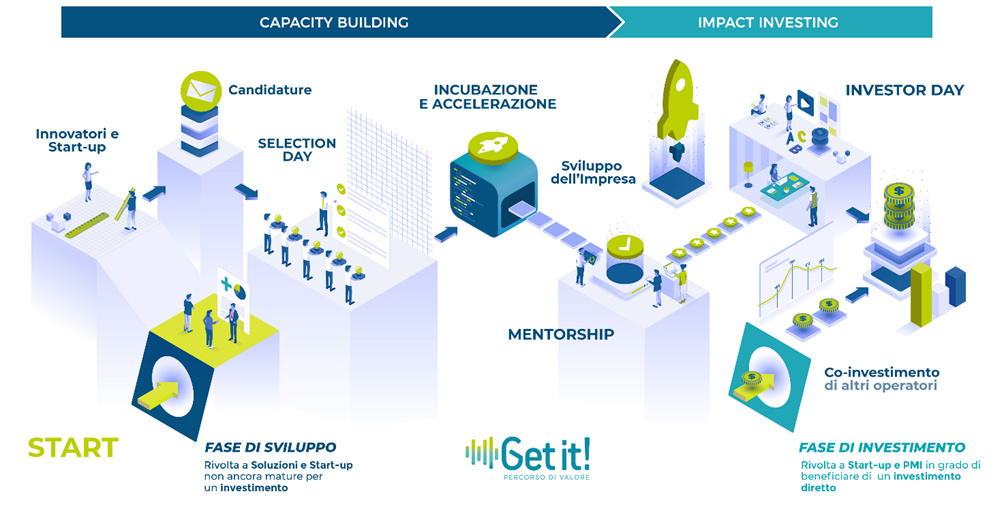
As part of the collaboration between Fondazione Cariplo and the Giordano dell’Amore Social Venture Foundation (FSVGDA), “Get it! 4Music” was launched in 2024, as a line focused on supporting Italian music entrepreneurship, also made possible by the involvement of Music Innovation Hub (MIH), as well as Cariplo Factory

The initiative aims to stimulate innovation in the music sector, facilitate market access for new acts and foster a creative, inclusive music ecosystem

To identify the most promising entrepreneurial projects and support their development, by offering a pathway of empowerment and direct investment, Get it! 4Music promotes a Call for Proposals for innovative projects and economically sustainable start-ups, companies and third-sector bodies that work on innovative solutions with social, environmental and cultural impact. 


Culture-based urban regeneration

Fondazione Cariplo’s Arts & Culture Area has long been promoting lines of intervention that can be traced back to the theme of “culture-based urban regeneration”, an approach that views the arts and culture as a development lever for the recovery of local areas witnessing degradation or abandonment.

Project pathway

The Foundation’s experience in this area includes initiatives such as the Cultural Districts project, conceived and developed between 2004 and 2015 to promote the leveraging of cultural heritage according to an approach of synergistic development in local areas. While the six Districts have spread mainly in extra-urban areas, except in Cremona and Mantua, between 2011 and 2013 the Foundation – through the Culture and Urban Areas call for proposals – supported the recovery and reuse of city locations to assist with support design and implementation.

Based on these experiences, in 2018 the Foundation – together with the Lombardy Region and Unioncamere Lombardia – signed a partnership agreement focused on the design and implementation of Integrated Culture Plans (ICPs). These aim to implement both on a local scale and on priority issues, integrated and synergistic interventions on cultural heritage and production that can promote leverage processes, to consolidate the link with economic development and tourist appeal. Created by public initiative, the ICPs represent the natural culmination of a process conducted in conjunction with a private institution whose goal has long been to innovate, experiment and catalyse potential resources. A further example is the Lacittàintorno cross-sectoral programme, launched in 2016 under a Memorandum of Understanding with the Municipality of Milan, with the aim of improving the quality of life and cultural offering in three areas of Milan identified as priorities in terms of critical issues and potential resources. In recent years, calls for proposals have also been issued with the express aim of regenerating disused spaces by grafting on new cultural functions, such as the “Spaces in transformation” call (2021), or with the purpose of restoring the original beauty, including in terms of landscaping, of locations where work has been done, such as the “Beauty rediscovered” call (2021). The latest initiative in this area is the Locations for regeneration call (active since 2023), a tool to encourage the reactivation of places already subject to public policies and regeneration processes, with the aim of promoting integrated and sustainable actions in the long term.

Strengthening skills

During the implementation of the initiatives, the need for specific technical skills not necessarily held by experts in the production and management of artistic and cultural activities became increasingly evident. In particular, in recent years this need has been encountered while support was being provided for the “Spaces in transformation” call. Carried out with the technical assistance of KCity – Urban Regeneration, this support was proposed in order to disseminate the French approach to transitional urbanism promoted by the call and its related opportunities. At that time, on the one hand good quality was found in the artistic and cultural proposal made by the proposing bodies; on the other, however, in some cases it has proved difficult to deal with reasoning regarding the context, the long-term vision of transformation and the sustainability of operations. In addition to the one-to-one consultancy provided to the beneficiary entities of the “Spaces in transformation” call, online training sessions on the methodology and tools of transitional reuse were also organised with KCity; after the three years of support, a final report was produced on the experience, now available on the KCity website.

Based on the aforementioned experiences, since 2023 Fondazione Cariplo has chosen to work on the dissemination of skills in the field of cultural-based urban regeneration, supporting Third Sector entities and public bodies in their local areas (Lombardy and the provinces of Novara and VCO) in the design and definition of coherent, sustainable long-term project proposals integrated with the relevant local development plans. According to these intentions, work was started on establishing a hub for cultural-based urban regeneration, named BeiLuoghi, in the belief that cultural-based urban regeneration is a powerful tool to support sustainable, accessible and innovative development processes. BeiLuoghi, designed and built in collaboration with the Social Housing Foundation, aims to become a space and a benchmark for the launch and development of a season of cultural-based urban regeneration projects, to encourage the dissemination of knowledge and tools for the development of local areas and sustainable social infrastructure. In this sense, the role of the project is also to foster intermediation between entities of various kinds, offering the opportunity to facilitate the development of complex, shared projects.

Next steps

From September 2025, the pathway of support created with the technical advice of Avanzi – Sustainability for actions, CheFare, Research and Intervention Codes, KCity and the Planning Area of the Social Housing Foundation will resume, working alongside the nine entities selected in the call for proposals on the design of attractive, sustainable places shared with communities in the relevant local areas.

The Cultural Districts project was launched in 2004 by Fondazione Cariplo, in conjunction with the Lombardy Region and the Polytechnic University of Milan; the aim was to leverage Lombardy’s cultural heritage with a view to development of local areas.

The first experiment was the Magistri Comacini Cultural District, in the province of Como, which launched an innovative model: the cultural district as a local ecosystem in which cultural and environmental heritage, services and production activities operate in synergy.

Notable features of the project:

  • long-term vision
  • investment in human capital
  • integration between culture and production chains
  • innovation in services and methodologies
  • sustainability of actions.

Unique in Italy in terms of duration and size, the project provided for a process of support and verification of the feasibility of the districts in the area, culminating in the creation of six cultural districts in Lombardy.

Thanks to co-financing of €20 million by the Foundation, and the significant contribution of the local areas involved, the following projects have been activated:

Être

Residency theatrical experiences

Inspired by the example of other European countries and certain Italian regions, the initiative was launched in 2007 with the aim of ‘giving space’ to young theatre production companies in Lombardy, according to the ‘residency’ model, based on a multi-year agreement between a company and a public body, generally an administration or a municipal theatre: the owning entity entrusts the company with a space under total or partial management, at advantageous conditions and with a financial endowment, linking it to the commitment to promote certain activities, primarily theatrical production, which thus ensure the leverage of the space provided.

The project was structured into three stages:

  • 22 residency projects were selected (nine Lombardy provinces directly engaged with theatrical and non-theatrical spaces for production and performance), led by emerging theatre companies, through a call for proposals repeated for three years (2007-2009)
  • starting from the selected projects, a structure was set up to represent and co-ordinate the residencies’ networking activities (the ETRE Association, the members of which continue to include the Lombardy companies that manage the residency projects);
  • A network has been created that promotes and protects the artistic work of emerging Lombardy companies.

The launch of a system of Lombardy residencies, unbound by rigid models, has made it possible to normalise the situation of various emerging theatre companies, by providing them with the tools to develop a coherent policy of settlement in the local area and professional growth on an artistic and organisational level.

FUNDER35

A growing cultural enterprise

The FUNDER35 project, founded in 2012 on the basis of an idea at theACRI Commission for Cultural Activities and Heritage, aims to assist young people’s cultural enterprises in the acquisition of management and production models, to ensure better positioning on the market and greater efficiency and sustainability. An initiative led by the Foundation, in its first edition (2012-2014) 10 foundations signed up, with as many as 18 in the second (2015-2017). The third edition, launched in 2018, has gathered the support of 19 foundations.

The foundations promote the FUNDER35 project with the aim of strengthening the solidity and stability of the best young people’s cultural enterprises in Italy, in the belief that these enterprises, with stronger organisation and management and thanks to an innovative and quality artistic and cultural proposal, can remain on the market more easily.

The organisations selected become recipients of support initiatives related to organisational, managerial and technological innovation issues, to support the improvement process and encourage the optimisation of resources. Orientation activities on tax, administrative and fundraising issues at a domestic and international level are also planned.

An overview of the resources allocated in the first two editions of the project is provided below:

FUNDER 35201220132014201520162017TOTALE
PROGETTI PERVENUTI595747166184169682
PROGETTI FINANZIATI151821505762223
DELIBERATO 
(€)
900.0001.000.0001.000.0002.500.0002.500.0002.500.00010.400.000

According to a decision by the 19 promoting foundations, the third edition of the FUNDER35 project differs from the predominantly “grant-making” nature of the previous two and focuses its resources on the following three axes:

  • consolidation and expansion of services for cultural enterprises put in place in previous years, to confirm the role of FUNDER35 as a national benchmark on issues related to business and cultural innovation, with particular attention to youth organisations
  • strengthening and gradual extension of the community of cultural enterprises selected in the previous two three-year periods (223 projects involving about 300 young people’s organisations);
  • construction of a network between all the initiatives carried out by the promoting Foundations, consistent with the theme of FUNDER35 and with the idea of further ‘welding’ the pact between the promoting Foundations, signalling them outwards as those most sensitive to the issue of cultural innovation and youth enterprise.

Over 10 years of experience at the FUNDER35 Project – sponsored by ACRI and with a broad scope at national level, a total of 20 promoting foundations, with Fondazione Cariplo in the lead – is recounted in the Funder35 Handbook, downloadable from this page.


Encouraging reading

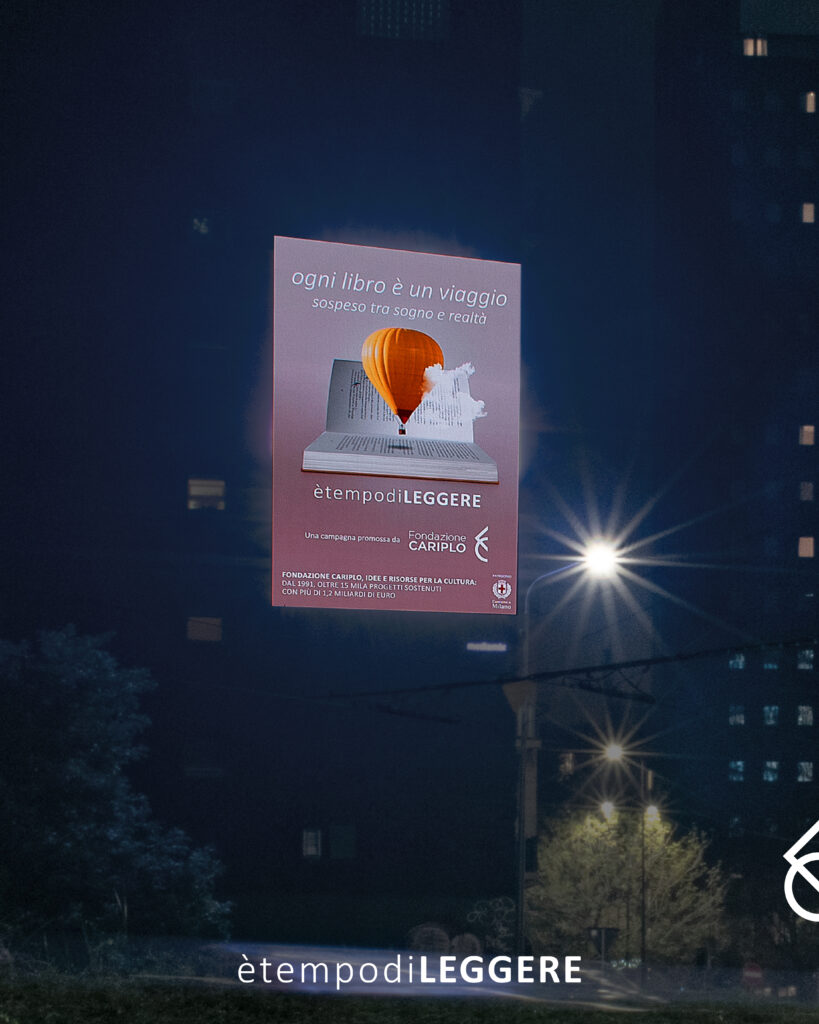
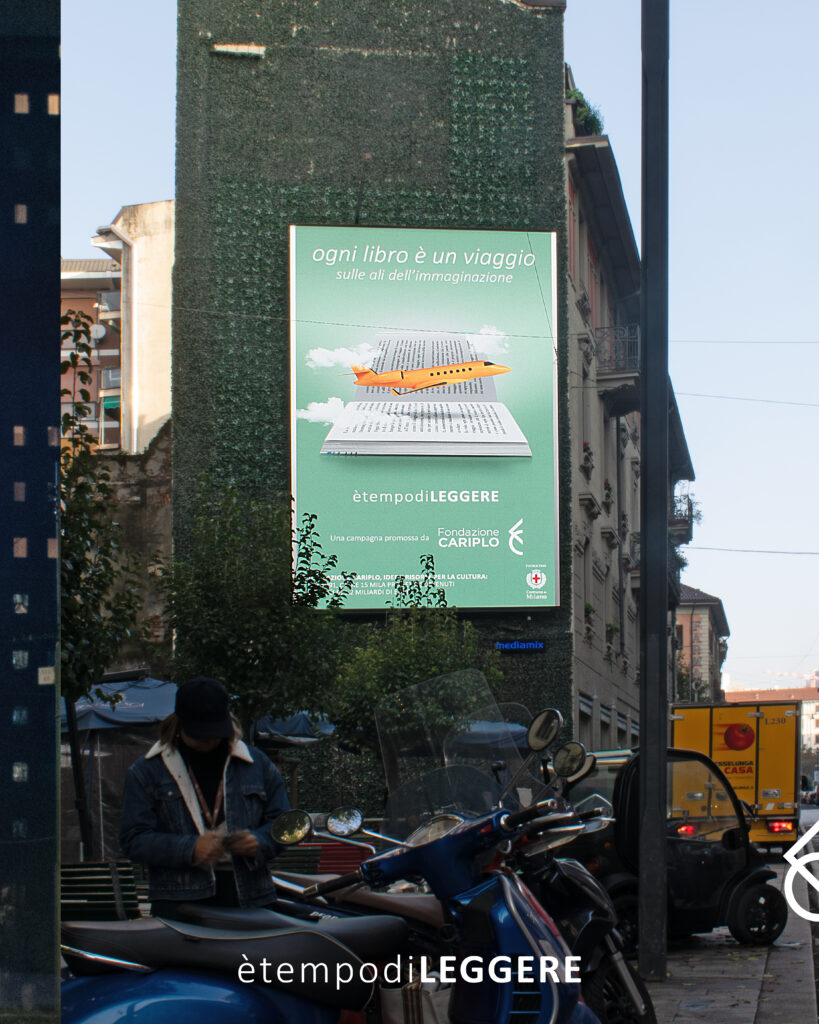
Reading is the key to accessing knowledge and information, an enabling factor for learning and independent study, and stimulates cultural enjoyment in its various forms. Even so, propensity to read in Italy is below the European average: about 40% of Italians say they read at least one book a year for reasons not related to study or work.

According to Istat, enjoyment of reading depends on factors such as gender, level of education and age; parents’ reading habits and where people live are highly significant. Based on a Delphi survey conducted in 2019-2020, which showed that reading is often not considered enjoyable when a matter of having to, Fondazione Cariplo has decided to focus on the themes of curiosity and the pleasure of reading, by encouraging a call for proposals entitled “For Books and Reading” (2020 and 2022). Conversely, with theWidespread culture call (2024 and 2025), the Foundation’s aim was to work towards a mixture of reading and other vernaculars such as theatre, music, cinema, etc.

A second factor highlighted by the Delphi survey was the lack of effective school policies regarding literacy education; this prompted Fondazione Cariplo to support certain flagship initiatives in the educational field:

As part of its international activities, the Foundation also supports The Europe Challenge, an ambitious initiative from the European Cultural Foundation that promotes libraries as safe spaces where people can meet, discuss and co-design initiatives working for the relevant community.


Cultural innovation

Scenario

In a rapidly changing context, the cultural and creative sector is called upon to dialogue and integrate with new vernaculars. Innovation represents an opportunity in this sense: it is not just a matter of introducing technological and digital tools, but of supporting more profound change, to generate valueaccessibility and stronger connections between institutions, companies and the relevant communities. 

Since 2013, Fondazione Cariplo has been committed to supporting cultural innovation, with the aim of accompanying institutions and cultural venues in the process of renewal. At the same time, the growth of cultural and creative enterprises (CCEs) is encouraged, as key players in the development of new models and services. 


Approach

Over the years, the Foundation has trialled and refined tools and programmes, promoting concrete opportunities for those who work in the sector. 

The most significant initiatives include the iC – Cultural Innovation project: launched in 2013, it has served as a benchmark for those who have intended to transform an innovative idea into a business. The four editions that took place between 2013 and 2018 involved over 1,200 candidates, resulting in the establishment of 45 new companies supported with non-repayable grants of over €4 million. This pathway made it possible to consolidate a creative and dynamic entrepreneurial ecosystem. 

Subsequently, Fondazione Cariplo promoted even more structured and integrated initiatives, in conjunction with the Lombardy Region and Unioncamere Lombardia, with the support of Cariplo Factory and the involvement of the Giordano dell’Amore Social Venture Foundation

The InnovaMusei initiative, carried out in the two-year period 2021-2022, fostered innovation in the Lombardy museum system at a critical time for the sector, due to the pandemic. It selected 15 CCEs to participate in a programme to strengthen Cariplo Factory and fund 15 collaboration projects between CCEs and museums based on a call for proposals held by the Lombardy Region. 

In 2023-2024, the initiative evolved into InnovaCultura, a programme extended to all Lombardy cultural venues, which recorded successful figures: 94 cultural venues involved141 CCEs applied for the Cariplo Factory call, 24 CCEs were supported49 innovative projects were funded under the regional call and implemented in partnership between CCEs and cultural venues, totalling €6 million. This result confirmed the validity of a model based on collaboration and integration of resources and skills. 


Second edition of InnovaCultura

In light of the positive impact of the pathways undertaken, in 2025 the partners decided to reiterate their commitment by relaunching the second edition of InnovaCultura, with the addition of further innovations and improvement actions. The project aims to strengthen the synergies between cultural venues and CCEs, by supporting the venues in the process of innovation and rethinking of their activities and at the same time supporting the consolidation of the CCEs. The initiative is structured into phases, which enhance the contribution of each of the project partners: 

  • call for interest to engage the cultural venues 
  • local co-design workshops to identify the venues’ innovation needs 
  • call for solutions for CCEs 
  • empowerment programme for selected CCEs 
  • innovation engagement workshops to promote training and synergy between venues and CCEs 
  • an event focusing on innovation in the cultural field 
  • impact investing actions in the best CCEs 
  • launch of the Lombardy Region call for partnerships between CCEs and cultural venues in the region, to develop innovative projects in the cultural sector 
  • selection and implementation of projects that applied under the regional call 
  • monitoring and evaluation of pathways. 

With an investment of €800,000 by Fondazione Cariplo and €3 million made available by the Lombardy Region for projects in partnership between CCEs and cultural venues, the second edition of InnovaCultura aims to revamp how culture is produced and experienced, to enrich the cultural experience and strengthen the sector’s social and economic impact.